Tampilkan postingan dengan label Switzerland. Tampilkan semua postingan

Jumat, 05 April 2013

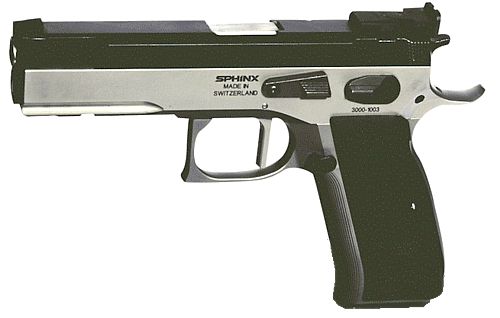
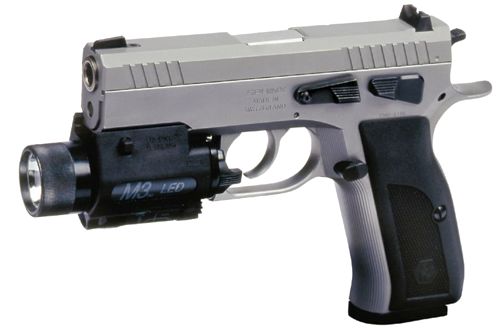
Sphinx 3000

Sphinx 3000 Standard pistol (full size model with adjustable sights)

Sphinx 3000T pistol (short-barreled Tactical / Police version with flashlight installed on integral rail)


  3000 Standard 3000 Tactical
Calibers 9x19mm Luger/Para; 9x21mm IMI; .40S&W
Weight unloaded ~ 1040 g ~ 950 g
Length 215 mm 195 mm
Barrel length 115 mm 95 mm
Capacity 16 rounds (9mm) or 12 rounds (.40)

Sphinx pistols are made in Switzerland, by the Sphinx Systems Ltd company. The Sphinx 3000 pistols are direct descendants of the already famous Sphinx AT 2000 pistols. The Sphinx 3000 pistols were introduced in 2003, and are available in various versions and calibers, for sport (IPSC and IDPA), self-defense and security / police services. Sphinx 3000 pistols offer extremely high workmanship and reliability, top class accuracy and reliability, almost indestructible all-steel design. These pistols are by no means cheap, but offer probably the best "out of the box" quality money can buy. More models of this pistol is available for sport shooters, including models specially adapted for various IPSC and IDPA classes. These models can be factory fitted with extended magazines, red-dot scope mounts, sport-tuned single action triggers and other options. According to the sources at Sphinx company, the .45ACP version of the Sphinx 3000 is now in development (as of March 2004).
Sphinx 3000 is a short recoil operated, locked breech pistol. The barrel is operated using a Browning cam system, and is locked to slide by single lug via large ejection port. Frame and slide are made from steel for maximum rigidity. The frame is completely machined from two steel blocks and then permanently assembled. Trigger guard is shaped for comfortable two-hand hold. Frame on all Sphinx 3000 pistols has an integral accessory rail under the barrel. Sphinx 3000 pistols feature a Double Action trigger with external hammer, but can be fitted (on request) with Single action trigger systems. Various models can be fitted with standard safety which can lock the hammer either in cocked or uncocked position, or with the decock-only lever. The safety or decocker levers are ambidextrous and provided on both sides of the frame. The slide stop lever is also installed on both sides of the frame. Tactical models are similar in design but have shortened slide and barrel, and can be ordered with SA, DA or DAO triggers. Tactical models are fitted with fixed sights with white inserts; Other models are usually fitted with adjustable sights. In any case, both front and rear sight are dovetailed into the slide, and can be easily replaced if required.

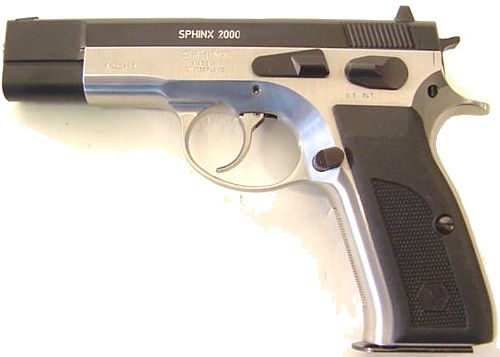
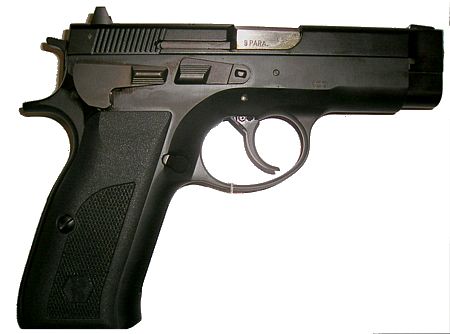
Sphinx AT 2000

Sphinx 2000 pistol, left side

Sphinx 2000 pistol, right side

Sphinx 2000P pistol (with decocker lever, shortened barrel and slide)


  AT 2000 AT 2000P
Calibers 9x19mm Luger/Para; 9x21mm IMI; .40S&W
Weight unloaded ~ 1000 g ~ 940 g
Length 204 mm 184 mm
Barrel length 115 mm 93 mm
Capacity 15 rounds (9mm) or 11 rounds (.40) 13 rounds (9mm)or 10 rounds (.40)

Sphinx pistols are made in Switzerland. The Sphinx AT 2000 pistols are based on the earlier ITM AT-84 and AT-88 pistols, which also were made in Switzerland. The earliest AT-84 pistols were plain licensed copies of the Czech CZ-75 pistol, manufactured during second half of the 1980s. The AT-88 introduced several improvements, including the firing pin safety and slightly different barrel / slide locking, and Sphinx 2000 pistols, produced since circa 1990, inherited these features from AT-88. Sphinx pistols are made in vide variety of models and modifications, suitable for self-defense, police duty, and practical shooting under IPSC and IDPA rules. Sphinx pistols are extremely well made, with beautiful finish and almost indestructible all-steel construction. These pistols are quite expensive, but offer probably the best quality and reliability the money can buy. Sphinx 2000 pistols in various models are in use by Australia, Belgium, Norway, Swiss and Venezuela police forces.
Sphinx AT 2000 is a short recoil operated, locked breech pistol. The barrel is operated using a Browning cam system, and is locked to slide by single lug via large ejection port. Frame and slide are made from steel for maximum rigidity. All Sphinx pistols feature a Double Action trigger with external hammer. Various models can be fitted with standard safety which can lock the hammer either in cocked or uncocked position, or with the decock-only lever. The safety or decocker levers can be installed on either side of the frame or on both sides simultaneously. The slide stop lever also can be installed on either or both sides of the frame. Compact ("Police") models are similar in design but have shortened slide and barrel, and, in some versions, also slightly shortened grip, which accommodates the shorter magazine (13 rounds instead of standard 15 rounds). Standard and police models are fitted with fixed sights with white inserts; Sport models are usually fitted with adjustable sights. In any case, both front and rear sight are dovetailed into the slide, and can be easily replaced if required.

SIG P210

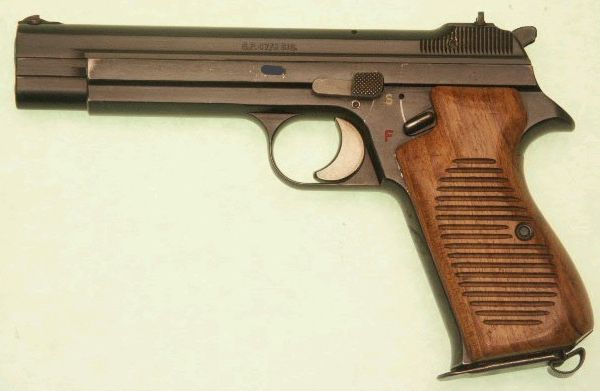
Early production (pre- P210 designation) SIG S.P. 47/8 pistol, left side

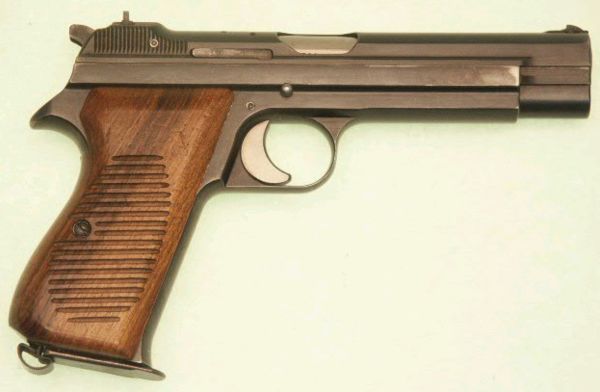
Early production (pre- P210 designation) SIG S.P. 47/8 pistol, right side

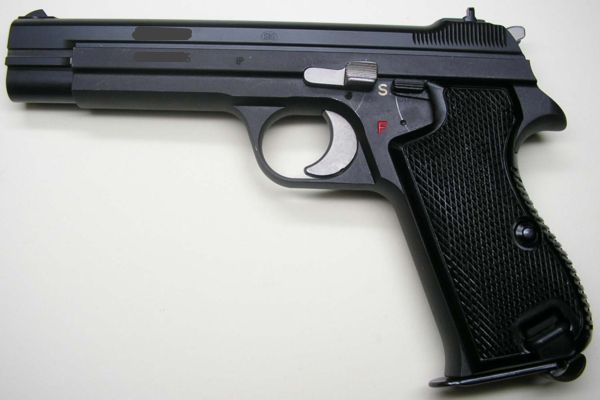
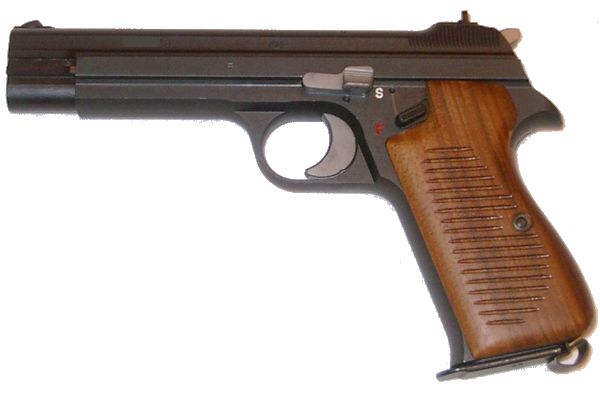
SIG P210-2, basically same as the Swiss Army Pistole 49. These pistols were available with either wooden or black plastic grips.

SIG P210-4, as made for West German BundesGrentzSchutz (Border Guard). Note that it has no lanyard ring on the grip

SIG P210-5, a dedicated
SIG P210-5, a dedicated "Sport" version with long barrel and adjustable sight

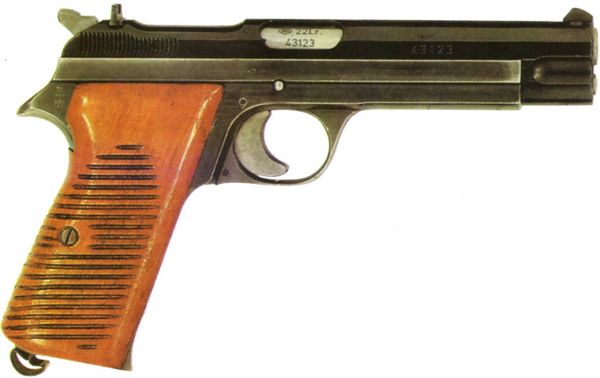
SIG P210-7, a small-bore .22LR training / sport pistol.

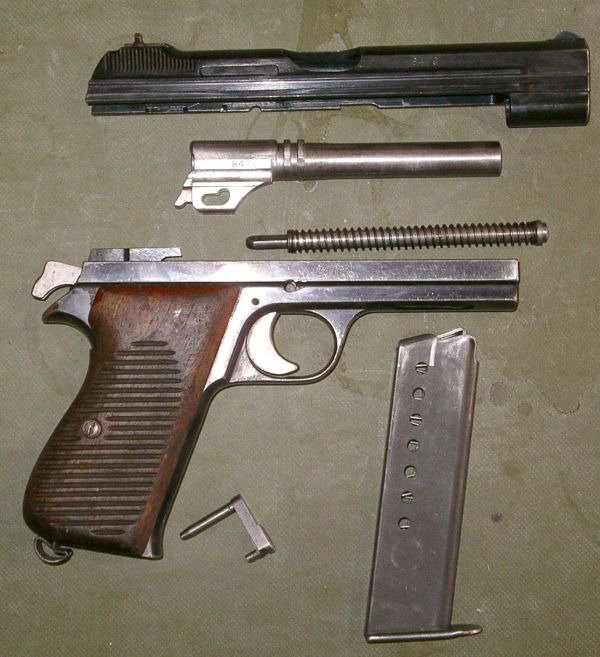
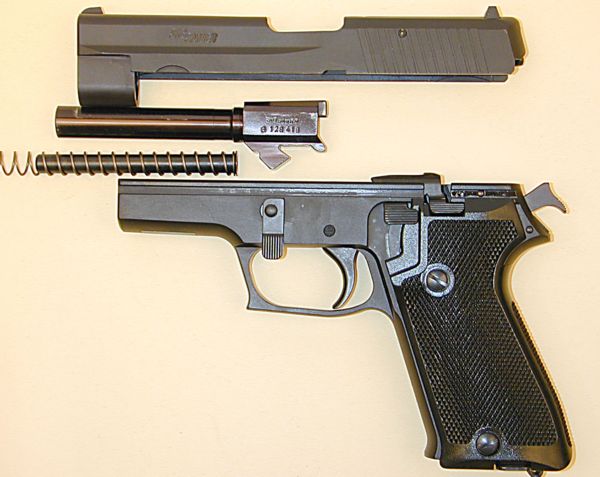
SIG P210 partially disassembled


Type: Single Action
Chamber: 9x19mm Luger/Parabellum, 7.65x19mm Parabellum, .22LR (all interchangeable)
Weight unloaded: 900 g
Length: 215 mm
Barrel length: 120 mm (150 mm in P-210-7)
Capacity: 8 rounds

The SIG P210 pistol was born from Swiss Army trials for a new military pistol, which were conducted between 1943 and 1947. SIG based its pistols on patents of Charles Petter, bought from France during the late 1930s. Early SIG pistols displayed the clear influence of Petter designs, being copied from his French Mle.1935 pistol. In the search for an ideal military pistol both W+F (State owned arsenal in Bern) and SIG also tried both single-stack and double-stack magazine designs. Interestingly enough, the Swiss army found thick-gripped pistols with double-stack magazines to be less accurate, due to their less comfortable grip; so only single-stack designs competed in the last stage. In the final chase between the W+F 47 and SIG S.P. 47/8 the latter won the trials, and in 1949 it was officially adopted as Selbstladepistole SP/49 (or Pistole 49 for short). Also known as the “Neuhausen” (after the city where pistols were made), the S.P. 47/8 (before adoption of the P210 trade mark in 1957) or under its current commercial designation of SIG P210, this pistol quickly earned the distinction of being the most accurate and most expensive military pistol ever made. Also adopted by the army of Denmark, as well as the West German Border police (BSG - Bundesgrentzschutz) and some Swiss police units, this pistol was later converted with a series of sport modifications, and a great many shooting matches were (and still are) won with this gem of workmanship.
The SIG P210 is a short-recoil operated, locked-breech pistol of all-steel construction. It is somewhat unusual in that it has inner slide rails, that is, full-length slide rails are machined on the inside of the frame. Most parts are machined from solid steel forgings and then hand fitted. This results in increased durability and accuracy, but also greatly increases the cost of manufacture. The locking system is of the Browning type; the barrel locks into the slide with two lugs which fit into cuts on the underside of the slide. Unlocking is controlled by a cam-shaped cut made in the lug below the chamber area. The trigger is single-action, with an external hammer and a frame-mounted safety. In line with older Petter patents, the hammer, its spring and sear are made into a single removable unit. On service type pistols sights are fixed; both front and rear sight blades are dovetailed to the frame. Magazines are single-stack; magazine release is located at the base of the grip (except for recent production P210-8 pistols, made for US market, which have a button-type magazine release at the base of the trigger guard).
Over time, there have been several modifications of the basic P210 design, distinguished by digits after the dash, i.e. P210-2, P210-4, P210-5 etc. While service guns were made in 9mm caliber only, commercial pistols were also available in 7.65x21 Luger/Parabellum caliber, as well as in 5.6mm rimfire / .22LR. Caliber conversion units were available, as well as a complete kits that included one frame, two slides (7.65/9mm and .22LR) and three barrels and return springs.
The basic versions of P210 included the following:
· P210-1 – commercial version with polished finish
· P210-2 – same as the service type SP/49; matte finish
· P210-3 – version for Swiss police, polished finish, fixed sights
· P210-4 – version made specifically for the German border police (about 5,000 made, most in 9mm and a few in .22LR for training); has no lanyard ring on the grip
· P210-5 – sport type commercial pistol with adjustable sights, and standard or extended 150mm barrel
· P210-6 – sport type commercial pistol with fixed sights; differs from P210-2 with better finish and more expensive grips
· P210-7 – dedicated .22LR version
· P210-8 – “American” version with side-mounted magazine release
Manual safety: lever on the left side of the frame. Push lever up into horizontal position (marked with white “S” letter) to engage safety; pull it down to disengage safety, position is marked with a red “F”. 
How to field- strip (disassemble) P210: 1) remove the magazine by pressing the magazine release button; 2) check that the chamber is empty; 3) pull the slide back slightly, to align disassembly marks on the slide and barrel; 4) holding the slide partially retracted, push the slide stop axis pin inwards from the right, then pull the slide stop lever out of the frame toward the left; 4) carefully push the slide forward and out of the frame; 5) pull the hammer unit up out of the frame; 6) remove the return spring with its guide from below the barrel; 7) pull the barrel out of the slide.
Reassemble in reverse order.

SIG-Sauer SIG Pro

SIG-Sauer SIG Pro 2340 in .40SW caliber (9mm SP 2009 pistol looks exactly the same except for the markings)

SIG-Sauer SIG Pro SP 2022 pistol, developed for French police and gendarmerie forces.
 
Type: Double Action or Double Action Only
Chamber: 9x19mm Para, .357SIG, .40 S&W
Weight with empty magazine: 760 g (9mm); 790 g (.40 & .357)
Length: 187 mm
Barrel length: 99 mm
Capacity: 15 (9mm) or 12 (.40) rounds

The SIG Pro pistol is another joint effort between two famous European arms makers, the SAN Swiss Arms (formerly known as SIG Arms) and the J. P. Sauer & Sohn of Germany. Originally developed as a .40SW caliber service pistol with modular design, it was first announced in 1998 as the SIG Pro SP 2340. About one year later, the 9mm version, designated the SP 2009, was introduced and entered production. The SIG Pro is used by the US Drug Enforcement Administration (DEA), as well as by number of other law enforcement agencies worldwide. In the 2003, the French law enforcement agencies (including Gendarmerie and Police Nationale) adopted a slightly modified version of the SP 2009. New version of SIG Pro, designated as SP 2022,  is to replace Beretta 92G and some older pistols. Total of 250 000 SP 2022 pistols are ordered by France. 
The SIG Pro is a short recoil operated, locked breech pistol. It uses a fairy traditional browning cam-operated locking system. Barrel locks into the slide via enlarged ejection port. The frame is made from polymer, with detachable grip panels. Grip panels can be easily replaced and are available in several different sizes and shapes. The modular hammer unit can be installed in traditional DA or DAO versions. There's no manual safety on all SIG Pro pistols. Instead, SIG Pro pistols are fitted with typical SIG-Sauer frame mounted decocker lever, and with automated firing pin safety. The overall design is slightly different from earlier SIG-Sauer pistols such as P220 or P226, as there is no separate disassembly lever on the frame of SIG Pro, and the slide release lever looks quite different. The SP 2340 and 2009 pistols are fitted with proprietary accessory rail under the barrel, while SP 2022 is fitted with integral Picatinny rail. SP 2022 also can be equipped with detachable silencer. Fixed sights are dovetailed into the slide.

SIG-Sauer P250 DCc

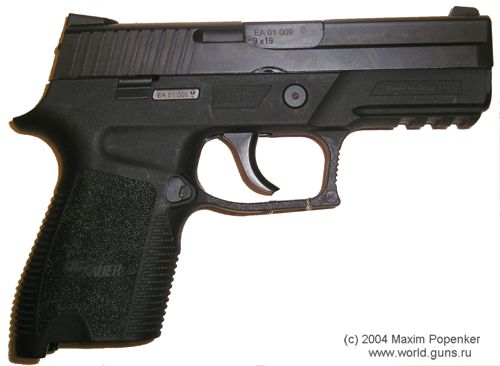
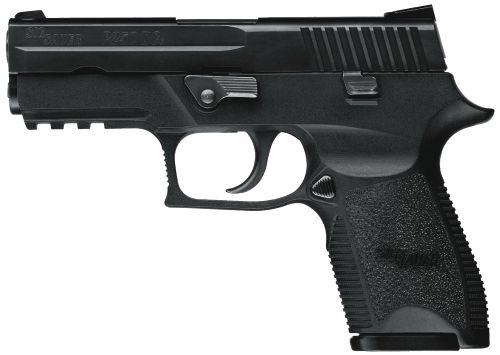
SIG-Sauer P250 DCc (compact) without magazine, left side view; version of 2004.

SIG-Sauer P250 DCc (compact) without magazine, right side view.

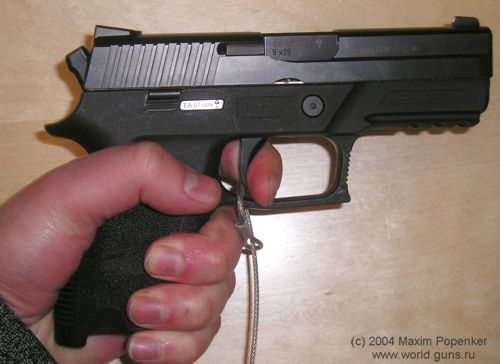
SIG-Sauer P250 DCc (compact) in the hand. Trigger is pulled partially, and the bobbed hammer is visible at the rear of the slide.
 
SIG-Sauer P250, version of 2008
image© SIG-Sauer

Three frame sizes for SIG-Sauer P250 Compact pistol, front to back: S (small), M (medium) and L (large) grip sizes.
image© SIG-Sauer

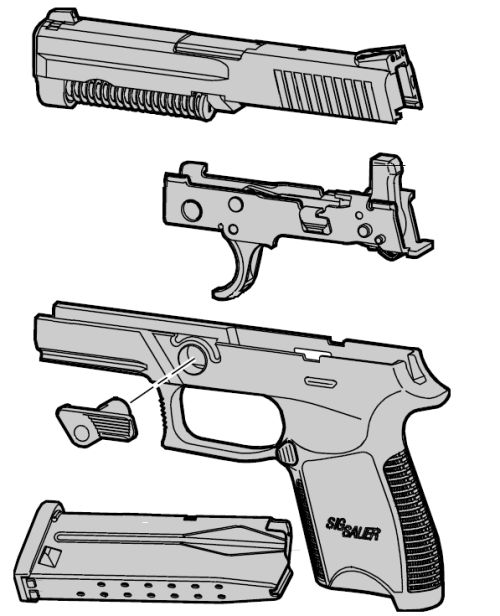
Diagram showing modular nature of the SIG-Sauer P250 pistol. The receiver unit in the center (with slide rails and trigger / hammer) is the main part of the design, which accepts all other interchangeable modules.
image© SIG-Sauer

Type: Double Action Only
Calibers: 9x19mm Parabellum; .357SIG, .40SW and .45ACP to be announced later
Weight unloaded: 700 g / 24.6 oz
Length: 183 mm / 7.2"
Barrel length: 98 mm / 3.9"
Capacity: 15 or 16 rounds (9mm)

The SIG-Sauer P250 DC is the most recent addition to the famous SIG-Sauer line of pistols. First announced at the IWA-2004 exhibition in Nurnberg, Germany (March 12-15, 2004), this pistol then faced almost 4 years of continued development, which was a combined effort of German engineers at J.P.Sauer and American engineers from SIGARMS. The gun was re-introduced in late 2007, and is now (February 2008) available in single caliber (9mm), single frame size (compact) and three grip sizes (S - small, M - medium and L - large). Other calibers and barrel / frame sizes are to be announced later. The key feature of the P250 is its complete modularity - using a variety of barrel / slide and frame combinations any user will be available to assemble any conceivable configuration, using the steel serialized receiver as the central assembling point. This will be most useful for large police departments of security companies which will be able to tailor their pistol inventory for various tactical needs (compact pistols for concealed carry, full size pistols for holster carry, various calibers) and for various shooters (variety of grip sizes for each frame configuration), yet have only one pistol type with unified training and maintenance procedures.
The SIG-Sauer P250 DC pistol was developed and is now produced by the famous German arms manufacturer, the J. P. Sauer & Sohn Ges.m.b.H., which is a part of the international SIGARMS corporation. Development of the pistol started circa 2001. The P250 was designed according to the latest official German guidelines for police pistol.
The SIG-Sauer P250 DC is a short recoil operated, locked breech pistol. It uses typical SIG-Sauer cam-operated barrel, which locks into the ejection port on the slide. The frame is made from high impact-resistant polymer. A steel receiver unit is inserted into the frame and held in place by the axis pin of the disassembly lever. The receiver is the only serialized part of the gun, and it contains frame rails and a fire control unit (trigger, hammer and all necessary linkage and springs). Single receiver unit will accept any frame size and any caliber kit (consisting of the barrel and slide). The slide stop levers are located on both sides of pistol. The SIG-Sauer P250 DC has a Double Action Only trigger with spurless hammer, and no manual safeties. The automated firing pin safety prevents the accidental discharges if gun is dropped or roughly handled. The trigger system has a very short trigger reset in DAO mode (about 3 mm or 1/8"), and the trigger pull is constant and consistent, with pull weight about 4 kg (9 lbs). SIG-Sauer P250 DC is fitted with combat-type sights with three white dots, and the frame has an integral Picatinny rail for flashlights or laser pointers.

SIG-Sauer P245

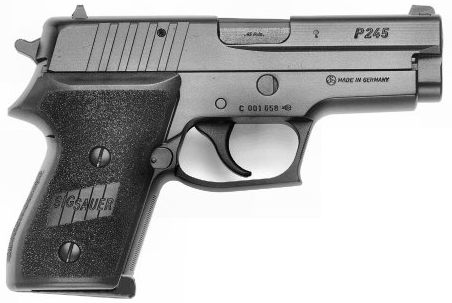
SIG-Sauer P245 pistol (Germany)
 
Type: Double Action
Caliber: .45ACP
Weight unloaded: 815 g
Length: 185 mm
Barrel length: 99 mm
Capacity: 6 rounds

First introduced in 1998, this compact pistol is a "cut-down" variant of the famous SIG-Sauer P220 pistol. Intended mostly for US market, this pistol is suitable for concealed carry and as a police backup weapon. The P245 has a traditional SIG-Sauer reliability, and, while somewhat heavy for a concealed gun, it offers a good recoil control. P245 is manufactured in Germany by the J. P. Sauer & Sohn company, which is a part of the international SIGARMS corporation.
P245 is a short recoil operated, locked breech pistol. It uses a typical Browning-style cam operated barrel, which locks into the ejection window in the slide. The slide is made from stamped steel, and has a separate breechblock held within the slide by the cross-pin. The frame is made from aluminum. The trigger is double action, with external hammer and a decocking lever on the left side of the frame. There's no manual safety, but P245 is provided with automatic firing pin safety.

SIG-Sauer P-230 and P-232

P-230 - early production 9mm model.

P-230 with aftermarket grip panels.

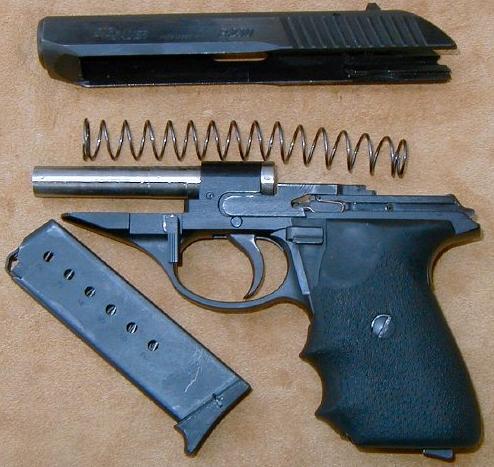
P-230 partially disassembled.

P-232 in 9mm - a currently produced pistol.


Data for P-232
Type: Double Action
Chamber: 7.65x17mm Browning (.32ACP) and 9x17 mm Browning Short (.380ACP) both models; also 9x18mm Police for P230
Weight unloaded: 500 g standard model; 600 g SL (stainless steel frame) models
Length: 168 mm
Barrel length: 92 mm
Capacity: 7 rounds (9mm) or 8 rounds (7.65mm)

The SIG-Sauer P-230 pistol was designed and produced in Germany by the joint venture of the J.P.Sauer (Germany) and a SIG Arms (Swiss) as a compact police and self-defence pistol. P-230 hit the market circa 1977 and was manufactured untill the 1996, when it was replaced by the P-232 pistol, which is no more than technologically and ergonomically improved P-230. Original P-230 was offered in variety of 3 calibers - 9mm Browning Short, 7.65mm Browning and a now discontinued 9mm Police, which was designed as a most powerful round suitable for simple blowback pistols. 9x18mm Police is rougly equal in terms of power to the Russian 9x18mm Makarov, but these two ARE NOT interchangeable! Attempt to fire 9x18mm Mak in the 9mm Police P-230 can result in serious damage to the pistol and injury to the shooter!
P-230 and P-232 are quite similar internally. Both are simple blowback operated, hammer fired pistols, with double action triggers and a manual decocker levers mounted on the left side of the frame, behind the trigger. P-232 also featured automated firing pin safety. Both pistols lack the slide stop. Both pistols can be found in standard form, with steel slide and aluminium alloy frame and blue finish, or in SL versions, with both slide and frame made from stainless steel. Latter models are slightly heavier and wear a polished steel finish. P-232 featured drift-ajustable rear sights, dovetailed into the slide. Feed is from single stack magazines for 7 9mm or 8 7.65mm rounds. It should be noted that both P-230 and P-232 feature magazine catch, located at the heel of the grip.
Both P-230 and P-232 are high quality, durable and reliable guns, as every other pistol, produced by the famous Swiss-German alliance. These guns are well suited for personal defence, concealed carry and as a backup guns, offering good accuracy and mild recoil.

SIG-Sauer P239

SIG-Sauer P239 pistol (Switzerland)
 
Caliber: 9 mm .357 SIG .40 S&W
Length, overall: 168mm
Height: 132 mm
Barrel length: 91.5mm
Weight w/o magazine: 775g
Capacity: 8 rounds (9mm), 7 rounds (.357 & .40)

This personal-sized (in SIG Arms terms) handgun is made in USA at SIG Arms factory. Technically it is similar to P228 compact gun, and differs only in size and magazine: while P228 has a dual-stack magazine for 12 rounds, P239 has a single-stack magazines for 7 or 8 rounds (depending on caliber).
P239 is a blowback-operated, locked breech design, with modified Browning-style linkless locking via slide ejection port. It has same DA or DAO trigger mechanism with striker pin safety, manual decocker (lever on the left side of the frame), slide stop. Slide is machined from solid steel. Frame is made from aluminium alloy.
P239 is reliable like all its bigger brothers from P22x family, and very accurate for its small size. It may be not so light, but packs a lot of firepower in compact package and is very popular as a concealed carry and police backup or off-duty gun.

SIG-Sauer P228 and P229

SIG-Sauer P228 pistol, left side.

SIG-Sauer P228 pistol, right side.

SIG-Sauer P229 pistol, left side.

SIG-Sauer P229 pistol, right side.
 
SIG-Sauer P229 pistol with accessory rail and DAO trigger (no decocking lever).

Characteristics
  P228 P229
Type
Double-Action or Double-Action Only semiautomatic
Caliber: 9x19mm Luger 9x19mm Luger, .357 SIG, .40 SW
Length, overall: 180 mm 180 mm
Barrel length: 99 mm 99 mm
Weight, w empty magazine: 825 g 905 g
Capacity: 13 rounds 13 (9mm) or 12 rounds

The SIG-Sauer P228 pistol was developed from the larger SIG-Sauer P226 pistol in 1989 in the same way as the earlier P225 pistol had been developed from P220 – which means that the designers basically chopped some length from the barrel and slide, as well as from the grip. The overall shape of the P228 also was made slightly less angular and more suited for concealed carry. In around 1991 the P228 was adopted by US Armed forces as the M11 pistol, and is issued to Military Police and some other units. The P228 is also a highly popular police and civilian sidearm and is widely issued to law enforcement forces in Europe and the USA. The P229, which was developed especially for the US market and is assembled in the USA using both German and US-made parts, is technically similar to the P228 except for the heavier slide, made by machining a bar of steel as opposed to the P228 slide, which is made by stamping and forming from sheet steel. The heavier slide on the P229 is necessary because of the more powerful ammunition used in this pistol. P229 pistols also can be adapted to any of three calibers (9mm, .357 and .40) by switching the barrel and return spring; P228 pistols are 9mm only and cannot be converted to other calibers.
Like the larger P226, the P228 and P229 pistols are available in aluminium frame/steel slide or stainless steel frame and slide versions, with standard DA or DAO triggers.
How to field- strip (disassemble) P228 and P229: 1) remove the magazine by pressing the magazine release button; 2) check that the chamber is empty; 3) pull the slide all the way back and lock it there with the slide stop; 4) rotate down the disassembly lever, which is located at the left side of the frame, above the trigger; 5) release the slide and carefully push it forward, and out of the frame; 6) remove the return spring assembly from below the barrel; 7) remove the barrel from the slide.
Reassemble in reverse order.

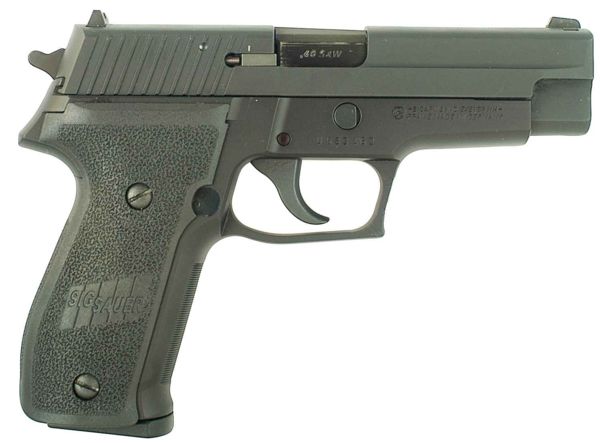
SIG-Sauer P226

Original (early production) SIG-Sauer P226 pistol in 9mm, with stamped slide, left side view.

Original (early production) SIG-Sauer P226 pistol in 9mm, with stamped slide, right side view.

Current production SIG-Sauer P226 pistol in .40SW, with machined slide. Note slight difference in the slide shape compared to older model.

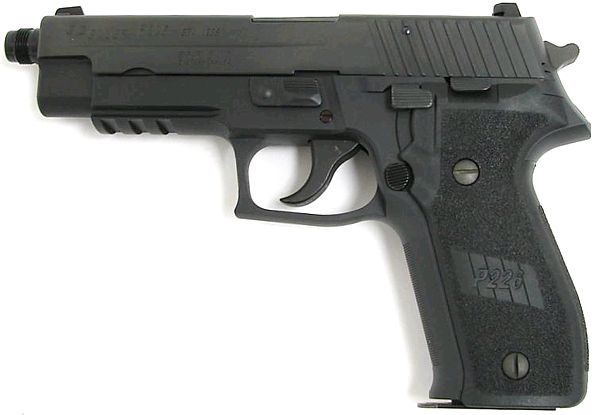
SIG-Sauer P226
SIG-Sauer P226 "tactical" of recent manufacture, with Picatinny-type accessory rail and extended barrel, threaded for use with sound suppressor (sliencer).

Characteristics
Type Double/Single Action or Double Action Only semi-automatic
Caliber: 9x19mm Luger, .357 SIG, .40SW
Length, overall: 196 mm
Barrel length: 112 mm
Weight (with empty magazine) : aluminum frame: 870 g (9mm), 920 0g (.40 and .357)
stainless steel frame: 1180 g
Magazine capacity: 15 rounds (9mm); 12 rounds (.40 and .357)

The SIG-Sauer P226 pistol was developed as an improved, high capacity version of the P220, specially for the US XM9 trials of 1982-84. The P226 was one of just two pistols that nominally passed all of the technical requirements for these trials, but at the last moment it lost to the other design, the Beretta 92SB-F, on the basis of the overall cost. Despite this, the P226 quickly became one of the most popular service pistols, being used by police, military and security forces, as well as by many civilian shooters, around the world. Initially available in 9mm, it was subsequently adapted to .40 S&W and .357 SIG calibers, which are extremely popular in the USA. In fact, the P226 was the first pistol to be chambered for the .357 SIG, a high velocity, high penetration 9mm cartridge, preferred by many American highway patrol services as well as by the US Security Service. 
The SIG-Sauer P226 is basically similar to the SIG-Sauer P220 pistol, except for the slightly different shape and double-stack magazines of greater capacity. It is available in a number of versions, with standard aluminium or stainless steel frames, with or without a Picatinny rail. Triggers are either a typical SIG-Sauer double action arrangement with a frame-mounted decocker and an automated firing pin block, or a double-action-only setup without decocker. 9mm and .40/.357 versions of this pistol also may differ in the design of the slide – while 9mm pistols may have a stamped steel slide, larger caliber pistols have heavier slides, machined from a solid bar of steel.
Manual safety: None; decocking lever at the left side of the frame, in the cut of the grip panel. 
How to field- strip (disassemble) P226: 1) remove the magazine by pressing the magazine release button; 2) check that the chamber is empty; 3) pull the slide all the way back and lock it there with the slide stop; 4) rotate down the disassembly lever, which is located at the left side of the frame, above the trigger; 5) release the slide and carefully push it forward, and out of the frame; 6) remove the return spring assembly from below the barrel; 7) remove the barrel from the slide.
Reassemble in reverse order.

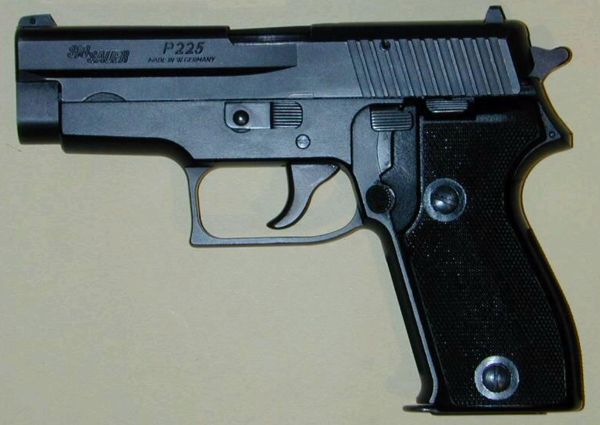
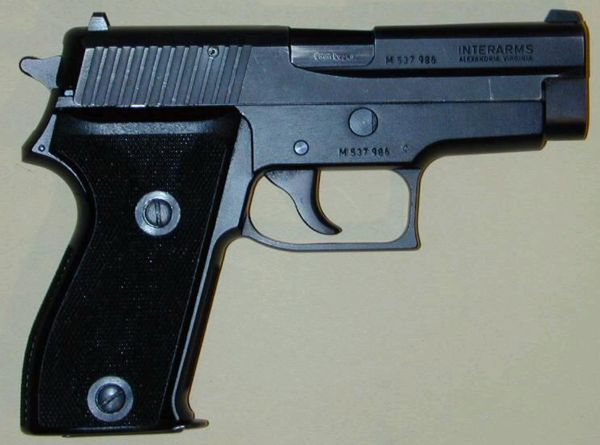
SIG-Sauer P225

SIG-Sauer P225 pistol, left side.

SIG-Sauer P225 pistol, right side.


Characteristics
Trigger: Double-Action or Double-Action Only
Caliber: 9x19mm Luger
Length, overall: 180 mm
Barrel length: 98 mm
Weight unloaded : 740 g
Capacity: 8 rounds

The SIG-Sauer P225 is a compact version of the "military" SIG-Sauer P220 pistol. It was developed for German police pistol trials of mid-seventies, and was subsequently approved for police use in FRG as P6 (Pistole 6). It is entirely similar in design and function to P220, and is widely used by numerous European police organizations, including certain Swiss and German police departments, as well as the Canadian army and even a few US police departments. The earliest versions of the P225 were equipped with a magazine release located at the bottom of the grip, but current production pistols have the magazine release button at the base of the trigger-guard.
How to field- strip (disassemble) P225: 1) remove the magazine by pressing the magazine release button; 2) check that the chamber is empty; 3) pull the slide all the way back and lock it there with the slide stop; 4) rotate down the disassembly lever, which is located at the left side of the frame, above the trigger; 5) release the slide and carefully push it forward, and out of the frame; 6) remove the return spring assembly from below the barrel; 7) remove the barrel from the slide.
Reassemble in reverse order.

SIG-Sauer P220


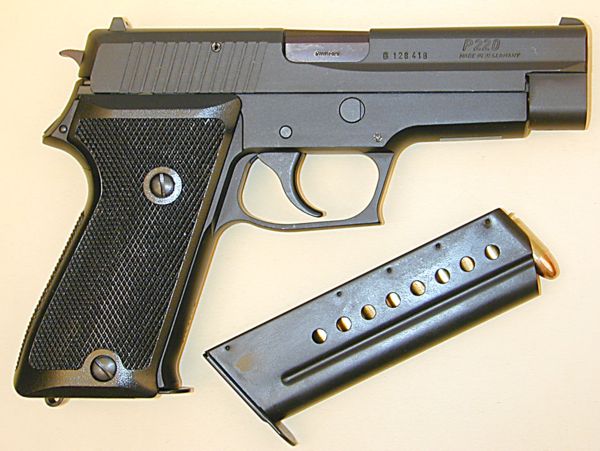
Early SIG-Sauer P220 pistol in 9mm. It is same as Swiss service Pistole 75, and has a bottom magazine release.

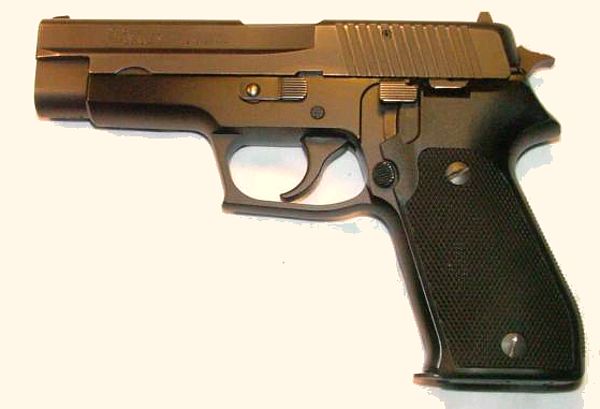
Early SIG-Sauer P220 pistol in 9mm, right side view.

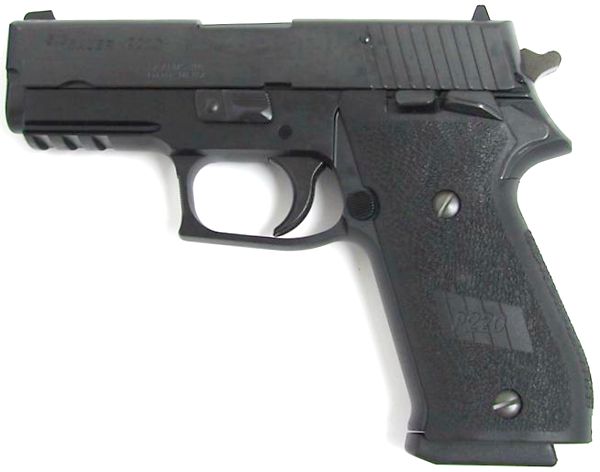
SIG-Sauer P220 pistol in .45ACP, with
SIG-Sauer P220 pistol in .45ACP, with "American" style magazine release at the left side of the grip.

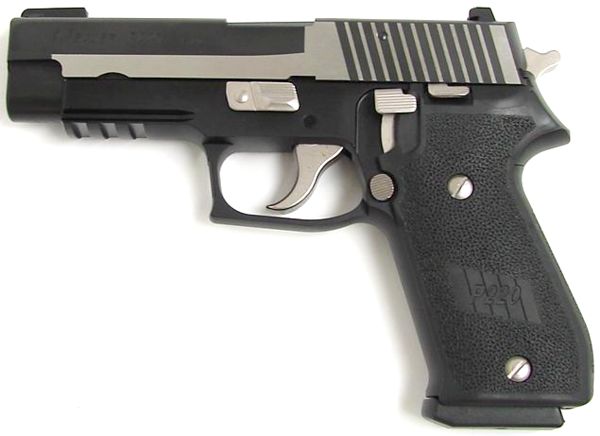
Recent production SIG-Sauer .45ACP P220 pistol with semi-custom
Recent production SIG-Sauer .45ACP P220 pistol with semi-custom "Equinox" finish and accessory rail.

The most recent version of the .45 caliber P220, with Single Action trigger and ambidextrous frame mounted safety; the version shown is the P220R carry SAO, with shortened barrel and accessory rail.

Early 9mm SIG-Sauer P220 pistol partially disassembled.
 
Trigger: Double-Action
Caliber: 9x19mm Luger and .45ACP; also .38 Super and 7.65mm Luger (both obsolete)
Length, overall: 198 mm
Barrel length: 112 mm
Weight unloaded : 800 g (aluminium frame)
1100 g (stainless steel frame)
Capacity: 8 rounds (7.65mm, 9mm. .38) or 7 rounds (.45)

The SIG-Sauer P220, often considered as the best “out of the box” .45 caliber double action pistol, started its life as the 9mm Pistole 75, the new double action sidearm for Swiss army. Developed during the early 1970s by the famous Swiss company Sweizerishe Industrie-Gesellschaft or SIG in short, this pistol was intended to replace the extremely accurate, but overly expensive SIG P210 pistol then in service with Swiss and some other armies. The pistol was indeed a very promising design, but strict Swiss laws severely limited the export of war materiel, so SIG decided to move the manufacture of its newest pistol abroad. For this reason SIG Holdings AG in 1976 acquired significant stocks of the J.P. Sauer & Son Company, which was located in Germany, and during the late 1970s started the manufacture of the SIG-Sauer P220 pistol in Germany.
The P220, as with most of its later siblings, was an instant and continuous success. Adopted by the Swiss and Japanese armies, and by a large number of European police organizations, this pistol also rapidly found its way into the USA, first thorough the Browning Arms Company of Utah, and, since the mid-1980s, through the SIGARMS Company of New Hampshire. Initially made in four calibers, today the P220 is manufactured only in .45 ACP, as its 9mm version has been largely replaced by the SIG-Sauer P226, a pistol of similar size but with a larger magazine capacity. Today the P220 is made in a number of versions which include both “service” and “sporting” modifications, the latter often fitted with extended barrels, compensators and adjustable sights. Service versions may have the Picatinny rail for accessories, as well as double-action or double-action-only triggers. Since the 2006, the PP20 also offered with Single action triggers and also in "Carry" configuration with shortened barrel. The P220 also could be made with an aluminium frame and steel slide, or with both frame and slide made from stainless steel. It is worth nothing that a high-capacity version of the .45 caliber P220 was developed during the early 1990s for the US market. Apparently designated P221, this gun was effectively killed by the so-called “Assault weapons ban”, the infamous legislation that limited the magazine capacity of civilian arms to 10 rounds, which was enforced in the USA between 1994 and 2004.
The SIG-Sauer P220 is short-recoil operated, locked-breech pistol. The locking is of modified Browning type, where the barrel engages the slide with single large lug entering the ejection window. The unlocking is controlled by a cam-shaped lug under the barrel, which interacts with the steel insert set into the aluminium frame. The slide is made from sheet steel by stamping and forming processes, with the separate breechblock pinned into the rear of the slide (machined slides are available on some current production .45 caliber models). The standard trigger is the double-action type, with an automatic firing pin block safety and a frame-mounted decocking lever. Double action only modifications do not have a decocker. Most recent SAO (Single action only) versions have ambidextrous non-decocking safeties located on the frame, which allow for "Cocked & Locked" carry. Magazines are single stack, with the magazine release located on the heel of the grip on early  versions, or at the base of the trigger-guard on the .45 caliber versions made for the US market. The standard sights are fixed, with high contrast inserts, and the rear sight is dovetailed to the slide.
How to field- strip (disassemble) P220: 1) remove the magazine by pressing the magazine release button; 2) check that the chamber is empty; 3) pull the slide all the way back and lock it there with the slide stop; 4) rotate down the disassembly lever, which is located at the left side of the frame, above the trigger; 5) release the slide and carefully push it forward, and out of the frame; 6) remove the return spring assembly from below the barrel; 7) remove the barrel from the slide.
Reassemble in reverse order.

Sabtu, 26 Januari 2013

Steyr - Solothurn S1-100 / MP-34

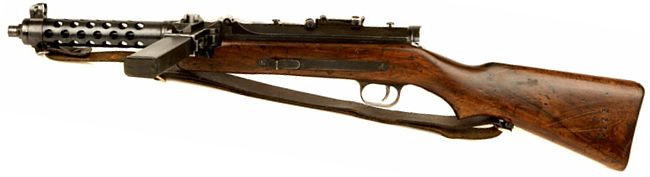
Steyr MP-34 submachine gun, left side.
 
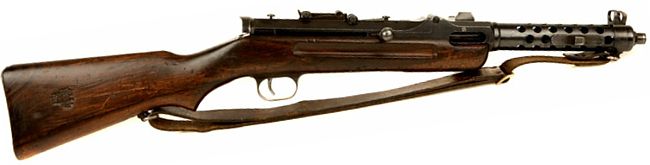
Steyr MP-34 submachine gun, right side.
 
Steyr MP-34 partially disassembled.
 
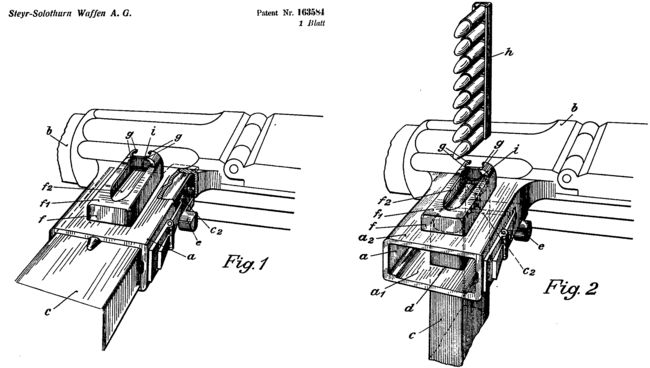
Drawing from original patent, covering S1-100 integral magazine loading device.
 
Characteristics
 
Caliber 9x19mm Luger / Parabellum, 9x23 Steyr, 9x25 Mauser Export
Weight 4,25 kg empty
Length 850 mm
Barrel length 200 mm
Rate of fire 400-500 rounds per minute
Magazine capacity 32 rounds
Effective range 150-200 meters

The story of this weapon start in around 1919, when German arms-making company Rheinmetall produced a prototype submachine gun designated MP.19. This weapon was developed by Lous Stange to same specifications as Schmeisser'sMP.18/I, but MP.19 came too late to see any action during WW1. After the end of WW1, Germany was severely limited in design and production of small arms by treaty of Versailles. When Hitler came into power, German military-oriented companies began to move the R&D outside of Germany to avoid treaty limitations. In 1929, Rheinmetall purchased the small Swiss-based company Wafenfabrik Solothurn, which was used to finalize some Rheinmetall small arms which were developed under secrecy in Germany. One of those weapons was an improved version of MP.19 submachine gun, which was announced by Waffenfabrik Solothurn under company index "S1-100". This was an excellent weapon, reliable, controllable and accurate, but Solothurn company lacked production capabilities. To make guns on industrial scale, Solothurn teamed with famous Austrian gun-making company Waffenfabrik Steyr, and formed trade company Steyr-Solothurn Waffen AG in Zurich, Switzerland. This company sold weapons designed by Rheinmetall and Solothurn and made by Steyr, and S1-100 submachine gun was among first products of this international conglomerated. In the 1930 Austrian police adopts the S1-100 as Steyr MP.30, chambered for standard Austrian 9x23 Steyr pistol cartridge. It was also exported to Chile, Bolivia, Uruguay and El Salvador; it also was sold in limited numbers to China, in 7,63x25 Mauser caliber. Portugal adopted the S1-100 in 7,65x22 Luger caliber in 1938, and in 1942 purchased more S1-100's from Steyr but this time in 9x19 Luger. For South American markets, Steyr produced version of S1-100 in .45ACP caliber; this version was distinguished by additional pistol grip under the forearm. Austrian army adopted the S1-100 as Steyr MP.34, chambered for powerful 9x25 Mauser ammunition. When Hitler's Germany occupied Austria in 1938, it quickly consumed most of Austrian MP.30's and MP.34's, and after rebarreling to 9x19 ammunition these weapons were issued to German troops as MP.34(รถ). Production of Steyr-Solothurn submachine guns has ceased in around 1940, when, under German administration, it was replaced in production at Steyr by much simpler and less expensive MP-40 submachine gun of German design. It must be noted that S1-100 was one of the finest submachine guns made prior to WW2, and probably one of most expensive.
Steyr-Solothurn S1-100 submachine gun was blowback operated, selective-fired weapon which fired from open bolt. Unlike most other submachine guns, the return spring was located in the buttstock and was linked to bolt via long push-rod, pivotally attached to the rear of the bolt. The basic action of the gun was accessible through the top cover, which was hinged at the front and opened up and forward to expose bolt and trigger unit below it. The fire mode selector was made in the form of a sliding switch, located at the left side of the stock. Early guns had Schmeisser-style bolt-locking safety in the form of hook-shaped cut which was used to engage the bolt handle when bolt was cocked. Later on, additional manual safety was added to the top cover, in front of the rear sight. this safety locked bolt either in cocked or closed position. The feed was from left side, with magazine housing slightly canted forward for more positive feeding Ejection was to the right. The magazine housing had an unusual magazine filler device, with slots for magazine at the bottom and for stripper clip - at the top. removed magazine was inserted into this device from the bottom, and then shooter placed stripper clips into the top of device and pushed cartridges down into magazine. Four standard 8-round clips were required to fill the magazine.
All S1-100 guns were fitted with wooden stock with semi-pistol grip. Barrel was enclosed into perforated jacket, which had provisions for mounting a bayonet. Sights included hooded front and tangent type rear, marked from 100 to 500 meters. One most unusual accessory, which was briefly advertised for S1-100 during mid-1930s, was a compact machine-gun type tripod, which was to provide additional stability for weapon when firing from ground. It seems that this tripod was never made in quantity.

Jumat, 28 Januari 2011

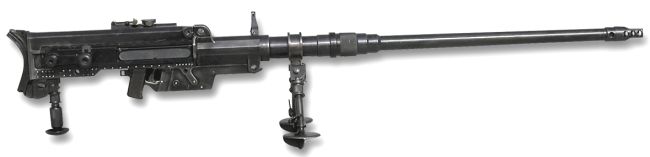
Solothurn S18-100 S18-1000 and S18-1100 anti-tank rifle

Solothurn S18-100 anti-tank rifle.
 
Solothurn S18-1100 anti-tank rifle; it was externally similar to the S18-1000, and the main difference was the select-fire capability of the S18-1100.

  Solothurn S18-100 Solothurn S18-1000
Type / action semi-automatic, recoil operated
Caliber  20x105B 20x138B
Weight unloaded 40 kg 51.7 kg
Length 1760 mm 2170 mm
Barrel length 930 mm 1447 mm
Magazine capacity 10 rounds 5 or 10 rounds
Armor penetration (Range / Angle / Penetration) 100 m / 90o / 35 mm
300 m / 90o / 27 mm
100 m / 90o / 40 mm
300 m / 90o / 35 mm

 Small Swiss arms-making company Solothurn Waffenfabrik AG emerged on the world markets during late 1920s, when it was purchased by huge German military contractor Rheinmetall Borsig AG. The Solothurn factory became an off-shore R&D and sales front-end for Rheinmetall, which was at the timeseverely limited in its military activities under treaty of Versaiiles. Using experience and ideas of German designers, Solothurn factory quickly developed a number of innovative small arms, ranging from submachine guns and up to large-caliber anti-tank rifles, which in certain respects were closer to artillery pieces rather than small arms. The Solothurn S18-100 was the first in line of large-caliber anti-tank rifles, developed by Solothurn during early 1930s. This was a massive weapon, which could be carried by the single soldier for a short time, and certainly not suited for firing it off-hands. Nevertheless, it was considered as antitank rifle rahher than cannon. It was offered for export sales, and a small number of  Solothurn S18-100 anti-tank rifles were sold to various European countries, such as Hungary or Finland. Later on, Solothurn engineers decided to improve performance of the gun, and redesigned it to fire more powerful 20x138B ammunition, which was also used in German FlaK (Anti-Aircraft) guns such as FlaK 30 and FlaK 38. This version was offered to intersted buyers as  Solothurn S18-1000 anti-tank rifle; a select-fire version of the  Solothurn S18-100 anti-tank rifle was offered as S18-1100 "Universalwaffe" (universal weapon), as it was intened for use against tanks from integral bipod, firing semi-auto, and as anti-aircraft gun (firing in bursts) from special AA mount. This version also found some buyers, including Italy, Netherlands and Switzerland. Few of the S18-1100 guns also were used by German army during WW2 as PzB-41(s). Overall, Solothurn guns looked like formidable weapons which could deal with variety of targets, using AP or fragmentation loads, but by the 1942 its armor penetration was insufficient to deal with Soviet T-34 tanks. These rifles also were overly heavy (at least, by standards of the foot infantry of the time), complicated and quite expensive.
Solothurn S18-100 anti-tank rifle is semi-automatic weapon which uses short recoil principle to operate its action. The barrel is locked to the bolt using rotary nut, attached to the barrel breach. This nut has series of lugs on its inner surface, which engage cuts made on the bolt heads. Upon recoil the nut is forced to rotate and thus unlocks the bolt, allowing it to recoil freely once the barel recoil is arrested by the buffer. Upon bolt recoil, a spent case is extracted and ejected. Once bolt recoil cycle is complete, it is driven forward by the spring, loading, chambering and locking the fresh cartridge. The feed is from detachable box magazines, which are insrtted horizontally from the left. The barrel was equipped with muzzle brake to decrease heavy recoil. Weapon is fitted with adjustable folding bipod under the barrel jacket, and a folding monopod under the butt. Solothurn S18-100 anti-tank rifle was equipped with iron sights, adjustable for range between 100 and 1500 meters, and an optional 2.5X telescopic sight can be installed for more accurate fire.
The Solothurn S18-1000 anti-tank rifle was essentially similar to the S18-100, but it used longer and more powerful round, and thus was of somewhat larger dimensions and weight. It has longer barrel with more efefctive muzzle brake.

Rabu, 26 Januari 2011

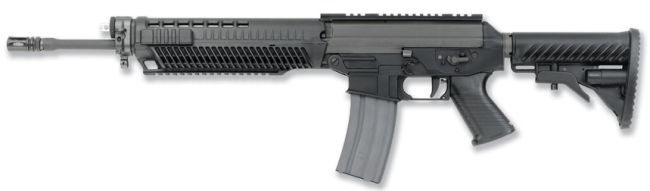
SIG 556 semi-automatic rifle

SIG 556 semi-automatic rifle,left side; buttstock collapsed.
 SIG 556 semi-automatic rifle,left side; buttstock collapsed.

SIG 556 semi-automatic rifle,right side.
 SIG 556 semi-automatic rifle,right side.

Type / actionsemi-automatic rifle,gas-operated
Caliber(s) .223Remington (5.56x45)
Weightunloaded3.54 kg/ 7.8 lbs
Length940 mm / 37"
Barrel length406 mm/ 16"
Magazinecapacity30 rounds

The SIG 556 semi-automatic rifle was announced in 2006 as a rifle for civilian and law-enforcement use.It is produced by international SIGARMS (now SIG Sauer) arms corporation and intended primary for US market. SIG 556 is based on SIG SG 550 assaul trifle, which is in use by Swiss army, and is limited to semi-automatic fire only, thus being legal in most countries that permit civilians to own rifles. SIG Sauer also produces a SIG 556 SWAT semi-automatic rifle which has a different butt stock and a 4-rail forend.
The SIG 556 semi-automatic rifle is gas operated, using short-stroke gaspiston located above the barrel. Gas system has manual gas regulator with two settings for normal and harsh conditions. The barrel is locked using rotary bolt with two massive lugs. Receiver is redesigned from original SIG SG 550 rifle, and features stamped steel upper part matedto aluminum alloy  lower part which houses a trigger unit and a redesigned magazine housing which accepts all M16 / Ar-15 type magazines.A bolt stop device is incorportaed into design. Manual safety is ambidextrous and located above the pistolgrip. As a standard, rifle is shipped with 30-round magazine. In basic configuration SIG 556 has no iron sights (adjustable folding ironsights are optional). Top of receiver is fitted with Picatinny rail foreasy installation of various optical or red-dot sights; additional rails are installed on the forend, at 3-, 6- and 9-o'clock positions.Buttstock is of non-folding, telescoped adjustable type.
 
Design by Free WordPress Themes | Bloggerized by Lasantha - Premium Blogger Themes | Online Project management